Showing posts with label Leslie Beck. Show all posts

Weed of the Month for May 2015 is Orchardgrass

Biology: Orchardgrass (Dactylis glomerata), is a clump-forming, or bunch-type, cool-season grassy weed found throughout the Midwestern United States. It is typically used as a type of grazing or forage grass in pastures but it can be a weed in turf. It’s bunch-type growth pattern, light blue-greenish color, ability to tolerate partial shade, and rapid leaf elongation make orchardgrass a problematic weed (plant out of place) in many lawns.

Identification: Orchardgrass is a bunch-type cool season perennial grass that is commonly found in home lawns throughout the state of Indiana. Orchardgrass often infests lawns as a contaminant in grass seed or in newly established lawns that previously consisted of pasture-land. Orchardgrass can often be found thriving in partially shady conditions that might stress the health of the surrounding, desirable turf. It is easily spotted in lawns when it grows much more quickly and is lighter-green the surrounding turf. Additionally, its bunch-type growth habit doesn’t make a particularly dense canopy when it infests lawns, thus only enhancing its status as a grassy weed.

Its leaves are folded in the bud and have a finely toothed, prominent membranous ligule. As it grows, the leaf blades become very long, are light-green/blue-green in color, and are still slightly rough to the touch on the surface and the outer leaf margins. The membranous ligules grow slightly longer and become more noticeable as the plant matures. The leaf sheaths are strongly compressed and folded. Because orchardgrass has a bunch-type growth habit, the clumps increase in size by developing aggressive tillers which emerge from the base crown of the plant. Orchardgrass also has a very rapid vertical growing rate compared to other desirable cool-season turf which requires more frequent mowing in order to keep a uniform lawn surface. Additionally, the leaf tips have a tendency to tear or shred, even when the mower blades are sharp.

 In the late spring through mid-summer, the plant produces seedheads in a stiff, branched panicle with fan-shaped, densely crowded spikelets of viable seed. The spikelets are often so crowded that when observed from afar, the seedhead almost looks globular or spherical in appearance.  

The prominent membranous ligule of orchardgrass.


A side view showing the compressed sheath/stem and folded vernation.

Orchardgrass has a boat-shaped leaf tip.

Clump of orchadgrass in a shady lawn.

Clump of orchadgrass in a newly seeded Kentucky bluegrass lawn.

Orchardgrass in a newly planted Kentucky bluegrass sod field.

The faster growth habit of orchardgrass is evident here.

Here a mature clump of orchardgrass is growing much quicker than the surrounding turf species.

Orchardgrass seedhead developing in a lawn between mowings.

Cultural control: None known specifically for orchardgrass. Mowing practices alone will not provide adequate management since orchardgrass can survive in many of the same environmental conditions and management programs as other desired turfgrass species. The best method of cultural control for orchardgrass is to avoid contaminating your turf system in the first place by buying certified seed mixtures/blends from a reputable seed company. Carefully read the labels of seed you are purchasing to make sure that orchardgrass is not mentioned as a weed seed. Existing clumps of orchardgrass can also be physically removed by hand, pocket knife or shovel/hoe.

Biological control: None known specifically for control of orchardgrass in cool-season lawns.

Chemical control: Unfortunately, only nonselective control options exist for orchardgrass in cool-season turf. Spot-treating with a nonselective systemic herbicide such as glyphosate (Roundup) will help to manage orchardgrass in cool-season lawns. For best results, apply when the plants are young and actively growing. Often multiple applications may be necessary to completely eradicate the weed; however, it is important to allow the grass to regrow before making any follow-up applications.


For more information on weed control, search this blog and check out our Turfgrass Weed Control for Professionals Publication.

For archives of past weed of the month postings, visit our Weed of the Month Archive.

Aaron Patton, Turfgrass Extension Specialist, Purdue University

Leslie Beck, Weed Extension Specialist, New Mexico State University
Read More

Weed of the month for February 2015 is Dandelion

Dandelion  

Biology: Dandelion (Taraxacum officinale), is a broadleaf perennial weed that can be found in lawns, nursery crops, and landscapes throughout the United States. It has the ability to survive many different soil types, environmental conditions, and management practices; thus, it is a commonly found weed in lawns throughout the northern half of the U.S.

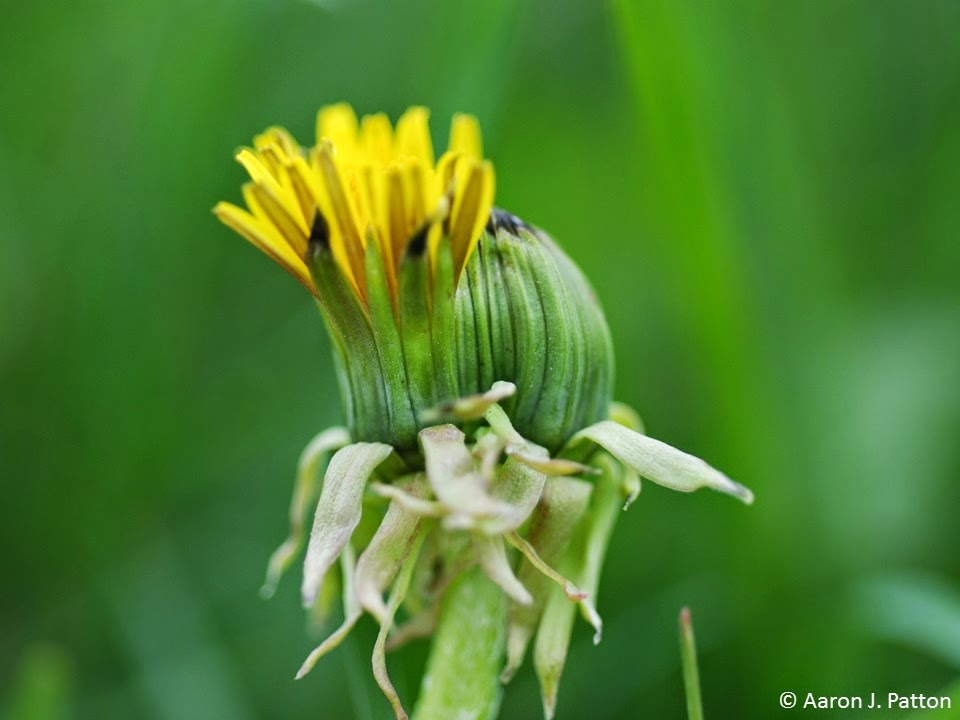
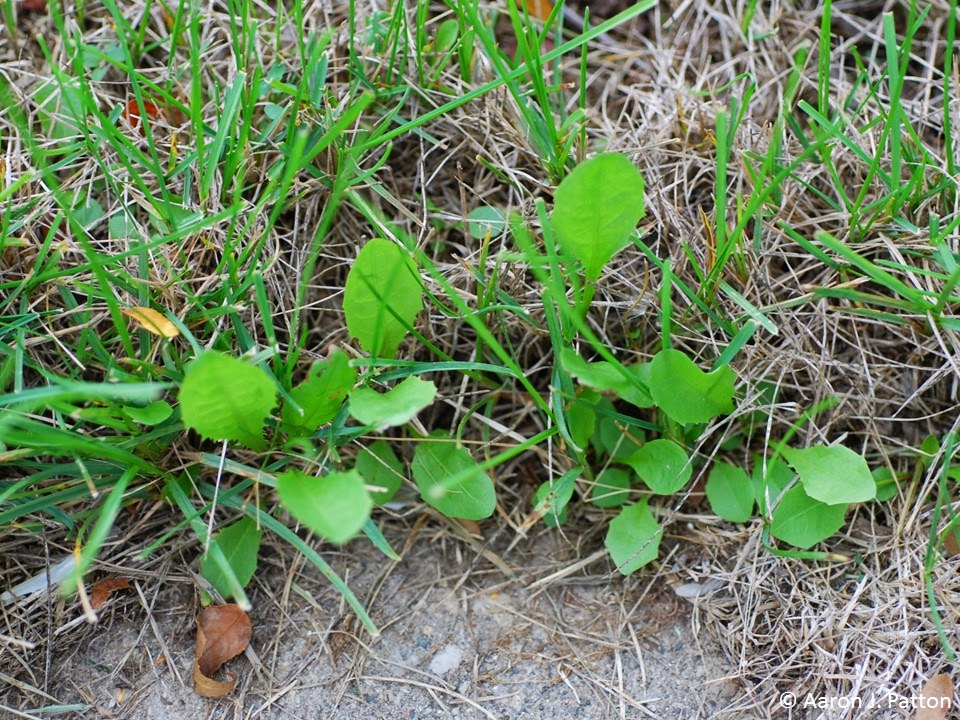
Identification: Dandelion is one of the most identifiable broadleaf weeds. It is a perennial broadleaf that is a member of the composite or daisy family. It prefers full sun and grows best in moist soils; however, it can survive in multiple environmental conditions (shade and heat) and management practices (fertility, drought, low mowing practices). Dandelions generally appear in early spring as they regrow from a few overwintering leaves and their taproot. Leaves have distinct wavy margins that form into the irregular ‘toothed’ appearance that makes the plant easily identifiable. The ends of the ‘teeth’ tend to point down towards the base of the rosette.

Dandelion produces a strong taproot and the plant has the capability to regenerate from surviving taproot segments (so hoeing a dandelion from your garden may not actually kill the plant). The survivability of this taproot helps to make dandelion a very prevalent and ‘difficult to completely control’ weed in lawns in Indiana, even following herbicide applications.

Dandelions typically flower from late April to mid-May in Indiana. Yellow flowers consisting of sunflower-like petals, are produced at the ends of long, leafless, erect stalks. Dandelions typically flower in their second year of growth after germination from seed. Yellow-brown fruit (flowers) are formed into a conspicuous, globe-like, white seedhead with light, feathery ends capable of easy dispersal by the wind. Each seedhead is capable of producing 140 to 190 individual viable seed, which helps to contribute to the vast populations of dandelion located in lawns throughout the Midwestern United States. Dandelion seeds germinate in emerge from late spring (after flowering and seed dispersal) to early autumn.

Dandelion may often be mistaken for chicory since both form toothed leaves that form from a basal rosette. However, the basal leaves of chicory tend to be rough to the touch with distinct, coarse hairs. Additionally, the toothed lobes of chicory are often alternately arranged on the leaf and point both backward and forward, while the toothed margins of dandelion are located opposite of each other on the leaf and predominantly point backward. The most distinct difference between the two plants is that dandelion produces yellow flowers while the flowers of chicory are purplish-blue in color. 


I am not sure who created this .gif movie of dandelion flowering, but it is amazing.


Cultural control: None known specifically for dandelion. Digging up as much of the taproot as possible will improve control. Dandelion knives and other similar tools are available for removing individual plants with very little disturbance to the soil. These tools, however, are only effective when all the taproot is removed. Adjusting fertilization practices to minimize the about of potassium (K) or potash (K2O) may help to reduce dandelion populations, but this process is very slow to generate results (many years). Management practices such as increased mowing heights, fertility, and irrigation may help to produce a dense vigorous turf capable of outcompeting germinating dandelion plants.

Biological control: The fungus Sclerotinia minor can selectively remove dandelions from cool-season lawns. In Canada it is formulated and sold as Sarritor, a new biological weed control product. This product has yet to be released in the US as of 2015.

Chemical control: Many herbicides effectively control dandelions, especially those that contain 2,4-D. Fall is the best time to control perennial broadleaves like dandelion, and both amine or ester formulations of 2,4-D provide optimum dandelion control in the fall. If dandelions are problematic in the spring, dandelion control can be optimized in the cooler months (April) by using ester formulations of broadleaf herbicides, or by using florasulam (Defendor). However, even ester formulations can be ineffective if applied too early. As spring progresses and temperatures warm, turf managers should switch from ester formulations of broadleaf herbicides to amine formulations because (1) their efficacy improves during warmer temperatures in May and early summer and (2) they are safer than ester formulations to use around landscape plantings, gardens, and other sensitive plants. For more information about using amines or esters, see “Should I use an amine or ester formulation for postemergence broadleaf weed control?” in" Turfgrass Weed Control for Professionals."


For more information on weed control, search this blog and check out our Turfgrass Weed Control for Professionals Publication.

For archives of past weed of the month postings, visit our Weed of the Month Archive.

To become a true dandelion aficionado, check out this publication from the Canadian Weed Science Society: click here

Aaron Patton, Turfgrass Extension Specialist, Purdue University
Leslie Beck, Weed Extension Specialist, New Mexico State University
Read More

Weed of the month for January 2015 is Common Mallow

Common Mallow  

Biology: Common mallow (Malva neglecta), also known as cheese mallow, cheese weed, and dwarf mallow, is a winter annual broadleaf weed, though it can also act as a biennial if environmental conditions that favor growth persist. It is generally found in low-maintenance turfgrass lawns, nursery crops, and landscapes. The ability of common mallow to survive in multiple environmental and soil conditions, such as frigid temperatures and dry, compacted soils, as well as its ability to survive lower mowing heights, make common mallow a common turfgrass weed throughout the state of Indiana.

Identification: Common mallow is a broadleaf winter annual weed that has the ability to persist into a biennial or perennial life cycle if environmental conditions are favorable. Common mallow can be found in lawns throughout the United States as a low-growing, spreading/prostrate broadleaf weed that will grow more erect in the absence of mowing. It reproduces by seed, which typically germinates from spring to early autumn; however, it is anchored to the ground by a short-to-deep, straight taproot which allows to plant to persist for an extended amount of time. Though it spreads primarily though seed, fragmented stems can also produce adventitious roots when nodes come into contact with the soil and conditions are moist enough. Plants initially develop as a basal rosette, and stems branch-out and elongate along the soil surface as the plant matures. The base of each thickened, hairy stem lies close to the soil surface while the tip (apex) is turned upward. The leaves can range from 0.5 to 1.5 inches in diameter and are located at the apex of thinner stems (petioles) branched alternatively from the main stems. Leaves are palmately veined (similar to fingers branching from the center of your palm), circular- to kidney-shaped, dark green with a ‘crinkled’ appearance, slightly hairy on both the upper and lower surfaces, and sharply toothed in the margins. Flowers are produced in May and can be present throughout the summer and into October. Flowers appear as 5 white, or whitish-lavender colored petals that are often tinged with purple or have purple veins. Flowers then produce a small fruit that can be described as the shape of a button or a wheel of cheese, hence its multiple common names. Each fruit contains 10-12 wedge-shaped seeds that break apart at maturity. Though common mallow seeds have a relatively low germination rate, they can remain viable in the soil for many years (decades). Often the stems will remain green and viable throughout the winter months, allowing the plant regenerate and sprout from the surviving crown the following spring. Common mallow can often be mistaken for ground ivy; however, ground ivy leaves are located opposite each other on the main stem and have rounded edges. Ground ivy also emits a strong mint-like odor when cut or damaged and has square stems commonly found within the mint family but not on common mallow (rounded stems). 


Common mallow (left) and ground ivy (right)

Common mallow growing in a sidewalk crack.


Cultural control: None known specifically for common mallow. Hand pulling or hoeing can be an effective method of physically removing the plant when it is young and the taproot is shorter. Its ability to survive in low maintenance conditions helps common mallow out-compete desirable plants; however, it is not as competitive with dense vigorous turf that is maintained at adequate mowing heights, fertilization rates, and irrigation practices.

Biological control: Some research has been focused on developing a fungus to help control other weedy mallows with a small amount of success; however, there are no commercially available products for the biological control of common mallow.

Chemical control: Since it reproduces from seed (generally), it is possible to manage common mallow through the use of preemergence herbicides. Postemergence herbicides can also be used to control common mallow. Two- or three-way mixtures of 2,4-D, dicamba, MCPP, or MCPA should provide adequate control. These products are available at local garden retailers and professional turf suppliers. Additionally, products that contain triclopyr, fluroxypyr, and quinclorac as one of the ingredients in a two- or three-combination herbicide will also work. In warm-season turf, metsulfuron (Manor) can control common mallow when applied in combination with a non-ionic surfactant (0.25%).

For more information on weed control, search this blog and check out our Turfgrass Weed Control for Professionals Publication.

For archives of past weed of the month postings, visit our Weed of the Month Archive.

Aaron Patton, Turfgrass Extension Specialist
Leslie Beck, Postdoctoral Research Associate
Read More

Weed of the month for December 2014 is Pineapple Weed

Pineapple Weed  

Biology: Pineapple weed (Matricaria matricariodies), behaves as either a summer or winter annual and it is commonly found throughout the United States. It is a weed of both high- and low-maintenance turfgrass lawns, landscapes, and nursery crops. Its ability to tolerate low mowing heights and highly compacted soils allow pineapple weed to compete with in weak turf.

Identification: Pineapple weed can behave as either a summer or winter annual broadleaf in both high- or low-maintenance turf throughout the Midwestern United States. It has a very low-growing, bushy, and branching growth habit and it reproduces by seed, which have the ability to emerge year-round if environmental conditions are favorable. Typically, the seedlings germinate in late summer to early fall and again from early spring to early summer. Young plants form a small, but dense rosette of fragrant, hairless, shiny bright green leaves that are also thick and succulent. Rosettes form from a very shallow taproot with a secondary fibrous root system. As the plant matures, the smooth, hairless stems continue to elongate in either an erect or a low-branching/spreading growth habit. The leaves are also hairless, fleshy and are pinnately divided with deep, finger-like lobes and short linear segments. All pineapple weed foliage (stems and leaves) have a very sweet odor similar to that of pineapple when damaged or crushed; thus, giving the plant its common name. From May through September, the plant produces flowers that are yellow, egg-shaped, and are composed of densely-packed, tiny, yellowish-green flowers. Flowers also emit a very sweet, pineapple like odor when crushed. Pineapple foliage can sometimes be confused with that of wild chamomile; however, the foliage of plants in the chamomile family can range from highly bitter to absent, not sweet and pineapple-like.  


Cultural control: None known specifically for pineapple weed. Though it tolerates low mowing heights and compacted soils, a combination of frequent mowing, adequate fertilization, and irrigation to keep turf dense will help the desired turf compete and gradually eradicate pineapple weed. Reducing traffic will also help increase turf density and reduce pineapple weed invasion. Additionally, hand pulling small populations may help to physically remove pineapple weed due to its shallow tap root.

Biological control: None known specifically for pineapple weed.

Chemical control: Since it reproduces from seed, it is possible to manage pineapple weed through the use of preemergence herbicides. However, control with preemergence herbicides may be difficult since the seeds have the ability to germinate year-round under favorable environmental conditions. Postemergence applications of two- or three-way mixtures of 2,4-D, dicamba, MCPP, or MCPA will likely provide adequate control in established turf. Though dicamba does the majority of the work in controlling pineapple weed, the addition of MCPP often helps to increase the effectiveness of the overall application. These products are available in multiple formulations at local retailers.

For more information on weed control, search this blog and check out our Turfgrass Weed Control for Professionals Publication.

For archives of past weed of the month postings, visit our Weed of the Month Archive.

Aaron Patton, Turfgrass Extension Specialist
Leslie Beck, Postdoctoral Research Associate
Read More

Weed of the Month for November 2014 is Roughstalk Bluegrass

Roughstalk Bluegrass  

Biology: Roughstalk bluegrass, primarily known by its scientific name (Poa trivialis), is a cool-season perennial grass that can be found throughout the Midwestern United States. Though roughstalk bluegrass can be found in landscapes, roadsides, meadows, and waste areas, it is primarily considered a turfgrass weed. It can successfully germinate in multiple environmental conditions, but it has a preference for moist soils and high levels of shade. This ability to successfully establish in conditions ideal for the growth and development of most turfgrass species, as well as its ability to spread throughout the turfgrass canopy by stolons, make roughstalk bluegrass a common turfgrass weed throughout the state of Indiana.

Identification: Roughstalk bluegrass is a cool-season perennial grass that can be found in both high- or low-maintenance turfgrass throughout the Midwestern United States. Though the plant looks like it has clumping growth patterns, the plant survives from year-to-year through creeping, above-ground stems called stolons, which spread easily throughout the surrounding turfgrass canopy. Seedlings of the plant are generally small and slow to establish compared to other turfgrass varieties. Despite being included in turfgrass seed mixtures for shady areas, roughstalk bluegrass is also a common contaminant of uncertified turfgrass seed mixtures, and will successfully germinate alongside the desired turf species with adequate soil temperature and moisture conditions. Roughstalk bluegrass leaves are folded in the bud with a membranous ligule that can range from absent to very distinct (long) in size (NOTE: when samples are sent to me for identification, it is usually the type with no or very short ligules). The presence of very small, scabrous hairs give the leaf surface and margins a rough feel, thus accounting for the common name ‘roughstalk bluegrass’. The plant has a broad collar and a boat-shaped leaf tip that is characteristic of other bluegrass turf species. The leaves are shiny, and are pale green or yellow-green in color, but they often turn red or maroon during periods of drought or heat stress. Seedheads are produced from mid-May through June in an open panicle similar to that of Kentucky bluegrass. Roughstalk bluegrass can remain green throughout the winter (with some minor leaf-tip burn) and during the summer months it generally goes dormant. Stolons can successfully germinate after many years of prolonged dormancy. It is often confused with other bluegrass species such as annual bluegrass, though it is considerably larger, and Kentucky bluegrass, though it is generally lighter green in color. Annual bluegrass is primarily bunch-type. Kentucky bluegrass has rhizomes (underground creeping stems). Roughstalk bluegrass can also be confused with creeping bentgrass which is also stoloniferous; however, creeping bentgrass is rolled in the bud while roughstalk bluegrass is folded in the bud.  


Rough bluegrass stolon.

New growth emerging from a node on a rough bluegrass stolon in September following summer stress.

Most rough bluegrass samples have a small or absent membranous ligule with no visible auricle present.

Heat stress in summer will start off as a purpling of the leaves.

Patches of rough bluegrass turn brown.

Eventually rough bluegrass patches will enter summer dormancy and appear dead.

This golf course had a lot of rough bluegrass which created a perennial problem of summer decline in their fairways.

Green stolons look like spaghetti.

Green stolons look like spaghetti. Stolons easily pull up in summer when plants are stressed and rooting is poor.

Cultural control: Rough bluegrass likes shady, wet areas. Therefore, reduce irrigation frequency to reduce the spread of this grassy weed. Mowing practices alone will not provide adequate management since roughstalk bluegrass can survive in many of the same environmental conditions and management programs as other desired turfgrass species. The best method of cultural control for roughstalk bluegrass is to avoid contaminating your turf system in the first place by buying certified seed mixtures/blends from a reputable seed company. Carefully read the labels of each seed bag. Unless the seed is advertised as a shade tolerant mixture, make sure roughstalk bluegrass species are not mentioned in the varieties of seed contained within the bag as a 'weed seed'.

Biological control: None known specifically for roughstalk bluegrass.

Chemical control: Small areas and patches of roughstalk bluegrass can possibly be managed by making repeat applications of non-selective herbicides such as glyphosate and glufosinate; however, complete control is difficult due to the survival of creeping stolons.Spring application timings before the stress of summer will aid in the control of rough bluegrass with these non-selective herbicides.

For golf courses and sod farms, other products exist that are not labeled for use in lawns. For more information on these products and on weed control, check out our Turfgrass Weed Control for Professionals Publication.

For archives of past weed of the month postings, visit our Weed of the Month Archive.

Aaron Patton, Turfgrass Extension Specialist
Leslie Beck, Postdoctoral Research Associate
Read More

Weed of the month for October 2014 is Buckhorn Plantain

Buckhorn Plantain  

Biology: Buckhorn plantain (Plantago lanceolata) is a perennial broadleaf that can be found in sites that are typically dry and consist of neutral to basic soils. Like the closely-related broadleaf plantain (Plantago major), buckhorn plantain can often be found in compacted soils but does not tolerate injury from constant traffic stress. It germinates by seed typically in spring or fall. Seeds have the ability to germinate in relative darkness and can successfully establish and develop into a mature plant; even when surrounded by tall, dense turf. These factors, coupled with its ability to survive low mowing heights, make buckhorn plantain a common weed in low or high maintenance turfgrass.

Identification: Buckhorn plantain is a perennial broadleaf weed that can be found in high and low-maintenance turf throughout the Midwestern United States. The plant produces a dense network of fibrous roots. Buckhorn plantain forms a central, basal rosette. Though it is a broadleaf weed, the first leaves (cotyledons) of the germinating plant are grass-like in appearance and are hairy only on the outer edge of the leaf (margins). As the plant matures, leaf clumps remain in a basal rosette; however, mature plants have the ability to produce multiple clumps all originating from the same crown. The leaves are spear- (lanceolate) to narrowly oval-shaped, are widest at just above the middle point of the leaf length, and are often twisting or heavily curled. Very prominent leaf veins run parallel to the leaf margins which may be entirely smooth or slightly toothed. These leaf veins form prominent ridges that can be easily seen and felt along the lower surface of the leaf. Leaf blades are generally smooth, but can occasionally have long, silky hairs at the base, and are bright to dark-green in color. In a taller turfgrass canopy, the leaves can grow more erect. As the mowing decreases in height and increases in frequency, leaf growth will be more prostrate along the surface of the turfgrass canopy. Small white flowers can be seen branching from dense, cone-shaped seedheads held aloft on an erect, leafless, hairy stalk from June throughout September. In yards that are infrequently mown in the Midwest, the appearance of hundreds of erect buckhorn plantain seed stalks can increase the look of a ‘weedy’ lawn during the summer months. Buckhorn plantain may be confused with bracted plantain (Plantago aristata); however, it has narrower, and hairier leaves and lack the deep, prominent leaf-vein ribs that are characteristic of buckhorn plantain. Buckhorn plantain may also be confused with broadleaf plantain; however, broadleaf plantain has much longer spike-inflorescence (not cone-shaped) and leaf veins appear to originate from a very distinct attachment point to a long, broad leaf-stem (petiole). Buckhorn plantain leaves originate from a very short stem which forms the basal rosette.

Buckhorn plantain grows in clumps of leaves which originate from a central rosette.

Buckhorn plantain leaves have parallel leaf veins that form very deep, prominent ridges.

 Dense population of buckhorn plantain.

 Cone-shaped seedhead with small white flowers.


 Dense groups of seedhead can often appear in lawns that are infrequently mowed. These seedheads can make lawns look very 'weedy', even from a distance.

 Multiple clumps of bright green buckhorn plantain leaves in a droughty cool-season lawn.

Though the plants are related, the leaves of broadleaf plantain (left) are much more broad with leaf margins that originate from the leaf stem (petiole). Buckhorn plantain leaves (right) are more narrow with seemingly parallel leaf venation.


Cultural control: None known specifically for buckhorn plantain. Since its primary method of dispersal is through seed, control or removal of the plant prior to seed production is crucial for deterring the spread of the weed. However, mowing practices alone to remove the seed stalks prior to germination will not provide adequate management since the vegetative portion of the plant can tolerate very low mowing heights. Additionally, since multiple plant clusters can originate from the same crown, it is possible to hand-weed buckhorn plantain; however, it is crucial to remove the crown to prevent regrowth.

Biological control: None known specifically for buckhorn plantain.

Chemical control: Both buckhorn and broadleaf plantain can be chemically controlled using similar herbicide products. Repeat applications of two- or three-way mixtures contianing 2,4-D, MCPP, or MCPA are available in multiple formulations at local retailers and can provide adequate control of buckhorn plantain. Additionally, herbicides that contain triclopyr (Turflon Ester) or triclopyr in combination with other herbicides, such as 2,4-D, can also control buckhorn plantain in cool-season grasses. For best results, herbicides should be applied when buckhorn plantain is actively growing. Follow the directions on the product label for suggestions on improving herbicide efficacy through mowing and irrigation practices prior to- and following the herbicide application.


For more information on weed control, search this blog and check out our Turfgrass Weed Control for Professionals Publication.

For archives of past weed of the month postings, visit our Weed of the Month Archive.

Aaron Patton, Turfgrass Extension Specialist
Leslie Beck, Postdoctoral Research Associate
Read More