Lee Pilz Memorial Fund

One of our Purdue turf graduates, Lee Pilz died unexpectedly on Saturday, February 21, 2015 in Indianapolis at the age of 39. He graduated from Purdue University in 1998 with a degree in turf science and was the assistant golf course superintendent at Tippecanoe Lake Country Club, Leesburg, IN.

Read Lee’s full obituary here.

The Hoosier Golf Course Superintendents Association has established a memorial fund for Lee’s family to help support Lee’s wife and three daughters. Please consider donating at the Hoosier GCSA website.
Read More

Weed of the month for February 2015 is Dandelion

Dandelion  

Biology: Dandelion (Taraxacum officinale), is a broadleaf perennial weed that can be found in lawns, nursery crops, and landscapes throughout the United States. It has the ability to survive many different soil types, environmental conditions, and management practices; thus, it is a commonly found weed in lawns throughout the northern half of the U.S.

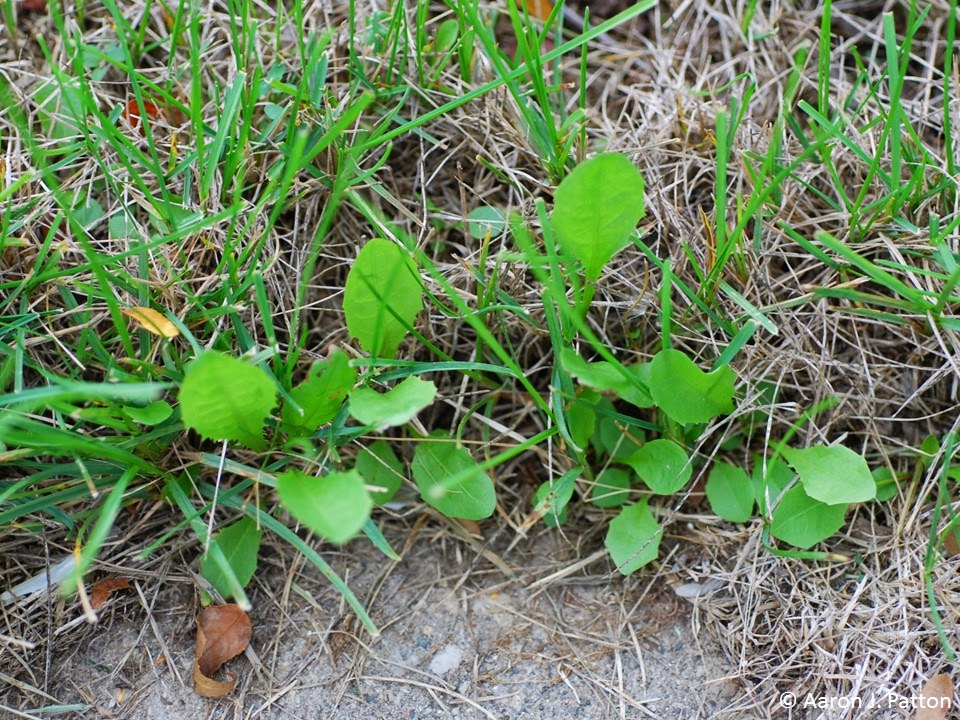
Identification: Dandelion is one of the most identifiable broadleaf weeds. It is a perennial broadleaf that is a member of the composite or daisy family. It prefers full sun and grows best in moist soils; however, it can survive in multiple environmental conditions (shade and heat) and management practices (fertility, drought, low mowing practices). Dandelions generally appear in early spring as they regrow from a few overwintering leaves and their taproot. Leaves have distinct wavy margins that form into the irregular ‘toothed’ appearance that makes the plant easily identifiable. The ends of the ‘teeth’ tend to point down towards the base of the rosette.

Dandelion produces a strong taproot and the plant has the capability to regenerate from surviving taproot segments (so hoeing a dandelion from your garden may not actually kill the plant). The survivability of this taproot helps to make dandelion a very prevalent and ‘difficult to completely control’ weed in lawns in Indiana, even following herbicide applications.

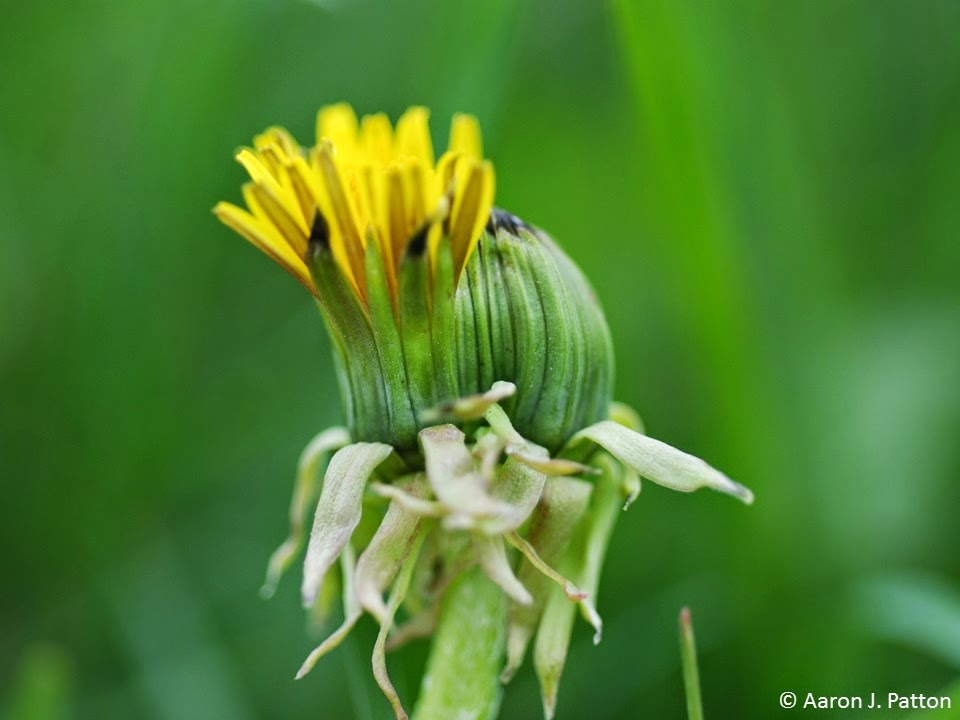
Dandelions typically flower from late April to mid-May in Indiana. Yellow flowers consisting of sunflower-like petals, are produced at the ends of long, leafless, erect stalks. Dandelions typically flower in their second year of growth after germination from seed. Yellow-brown fruit (flowers) are formed into a conspicuous, globe-like, white seedhead with light, feathery ends capable of easy dispersal by the wind. Each seedhead is capable of producing 140 to 190 individual viable seed, which helps to contribute to the vast populations of dandelion located in lawns throughout the Midwestern United States. Dandelion seeds germinate in emerge from late spring (after flowering and seed dispersal) to early autumn.

Dandelion may often be mistaken for chicory since both form toothed leaves that form from a basal rosette. However, the basal leaves of chicory tend to be rough to the touch with distinct, coarse hairs. Additionally, the toothed lobes of chicory are often alternately arranged on the leaf and point both backward and forward, while the toothed margins of dandelion are located opposite of each other on the leaf and predominantly point backward. The most distinct difference between the two plants is that dandelion produces yellow flowers while the flowers of chicory are purplish-blue in color. 


I am not sure who created this .gif movie of dandelion flowering, but it is amazing.


Cultural control: None known specifically for dandelion. Digging up as much of the taproot as possible will improve control. Dandelion knives and other similar tools are available for removing individual plants with very little disturbance to the soil. These tools, however, are only effective when all the taproot is removed. Adjusting fertilization practices to minimize the about of potassium (K) or potash (K2O) may help to reduce dandelion populations, but this process is very slow to generate results (many years). Management practices such as increased mowing heights, fertility, and irrigation may help to produce a dense vigorous turf capable of outcompeting germinating dandelion plants.

Biological control: The fungus Sclerotinia minor can selectively remove dandelions from cool-season lawns. In Canada it is formulated and sold as Sarritor, a new biological weed control product. This product has yet to be released in the US as of 2015.

Chemical control: Many herbicides effectively control dandelions, especially those that contain 2,4-D. Fall is the best time to control perennial broadleaves like dandelion, and both amine or ester formulations of 2,4-D provide optimum dandelion control in the fall. If dandelions are problematic in the spring, dandelion control can be optimized in the cooler months (April) by using ester formulations of broadleaf herbicides, or by using florasulam (Defendor). However, even ester formulations can be ineffective if applied too early. As spring progresses and temperatures warm, turf managers should switch from ester formulations of broadleaf herbicides to amine formulations because (1) their efficacy improves during warmer temperatures in May and early summer and (2) they are safer than ester formulations to use around landscape plantings, gardens, and other sensitive plants. For more information about using amines or esters, see “Should I use an amine or ester formulation for postemergence broadleaf weed control?” in" Turfgrass Weed Control for Professionals."


For more information on weed control, search this blog and check out our Turfgrass Weed Control for Professionals Publication.

For archives of past weed of the month postings, visit our Weed of the Month Archive.

To become a true dandelion aficionado, check out this publication from the Canadian Weed Science Society: click here. 

Aaron Patton, Turfgrass Extension Specialist, Purdue University
Leslie Beck, Weed Extension Specialist, New Mexico State University
Read More

Seed Early in the Spring for Better Success

Now that the snow has melted, you might be seeing some areas damaged from snow plows or other winter vehicle traffic that need repair. 


Seed planted now (late March) will begin to germinate in early to mid-April. The earlier in the year that you seed, the more time the turf will have for root development before summer. Additionally, the more time it will have to establish and compete with summer annual weeds.

Although any cool-season grass can be seeded in the spring, spring seedings are more successful with tall fescue and perennial ryegrass than with Kentucky bluegrass. This is because of the faster germination rate and better seedling vigor of perennial ryegrass and tall fescue compared to Kentucky bluegrass. If Kentucky bluegrass is seeded in the spring, consider using a mixture of tall fescue: Kentucky bluegrass (90:10, weight: weight) or a mixture of Kentucky bluegrass:perennial ryegrass (such as 80:20, weight: weight). Seeding Kentucky bluegrass alone in the spring will result in marginal bluegrass establishment in summer due to the slow germination and vigor of the seedlings and increased competition from crabgrass.


Keep in mind that spring seeding and preemergence herbicides don't go habd-in-hand. All preemergence herbicides (except Tupersan) work to prevent the emergence of turfgrass seeds as well as weed seeds, so do not reseed areas treated with a preemergence herbicide this spring or do not apply a preemergence herbicide if you plan on seeding.

For more information about spring seeding, see these previous turf tips.

Aaron Patton, Turfgrass Extension Specialist
Read More

This Week Felt Too Much Like 2014!


This cold weather reminded me of the cold weather we experienced last winter. While it is too early to tell what effect the weather might have had on the turf, it could have damaged some warm-season turf areas in north central Indiana (like our bermudagrass and zoysiagrass areas at the Daniel Turf Research Center) where there is little to no snow cover. Below are the temperature departures from normal the past 7 days as well as our current snow cover.

I have also linked last year's articles on winter kill if you want a refresher to prepare you for what might occur.


Cool-Season Turf Winterkill: Potential Losses and a Pathway to Recovery (3/26/2014)
Warm-season Turf Winterkill 2014: What Can you Expect and NOW WHAT? (March 12, 2014)
Winterkill Here on Bermudagrass! Now What? (June 27, 2014)


Aaron Patton, Turfgrass Extension Specialist


Read More

2015 Turf Weed Control for Professionals, Now Available

The revised edition of Turfgrass Weed Control for Professionals is now available. The 96 page publication includes content on:
  • Turfgrass Culture
  • Weed Types
  • Weed Life Cycles
  • Developing a Weed Control Program
  • Indicator Weeds              
  • Herbicide Information (use, nomenclature, classification, mode of action, movement, resistance, etc.)
  • Control of Tough Weeds
  • Frequently Asked Questions and Answers About Weed Control with Herbicides
  • Nonselective Herbicides/Fumigants for Turfgrass Renovation
  • Nonselective Herbicides for Turfgrass Border Maintenance (Edging)
  • Preemergence Herbicides (weed control ratings for preemergence herbicides, turf tolerance information, and more instructions for each product)
  • Postemergence Herbicides (weed control ratings for postemergence broadleaf herbicides and turf tolerance, and more instructions for each product)
  • Commonly Used Broadleaf Herbicide Combinations for Turfgrass
  • Active Ingredients in Commonly Used Herbicide Combinations
  • Sedge Control Herbicides (sedge control and turfgrass tolerance ratings, turf tolerance information, and more instructions for each product)
  • Plant Growth Regulators for General Turf Use
  • Preemergence, Postemergence and PGR Options for Putting Greens
  • Postemergence Weed Control in Creeping Bentgrass Putting Greens
  • Common and Trade Names of Registered Herbicides and Plant Growth Regulators (300 different products and 105 unique herbicide ingredient combination are discussing in this publication)
  • Herbicide/PGR Common Names, Chemical Families, and Modes of Action
  • Herbicide Math
This is truly a comprehensive guide for those using herbicides in turf regardless of whether you manage athletic fields, a golf course, lawns, cemeteries, sod farms, parks, or other turf areas.

Added in 2015 are
  • New Herbicides (6 new products)
  • Updated weed control recommendations based on label changes and new research
  • Revised and udpated answers Frequently Asked Questions

It is sold for $12 as a hard copy (paperback). A .pdf version is for sale for $10 for those that want an electronic copy. Use this electronic copy on all your devices. For companies with many employees interested in this information, a 25% discounted bulk order of 25 copies is available for $225 ($9 each).


Turfgrass Weed Control for Professionals, 2015

Aaron Patton, Turfgrass Extension Specialist

Read More

Purdue Ackerman-Allen Hills Course Renovation Update


As this year's golf season came to a close, the highly anticipated renovation of Purdue's 80 year-old Ackerman Hills golf course began. In addition to upgrading the course for collegiate-level play, the refurbishment also offers a unique opportunity for students in Purdue's Horticulture and Landscape Architecture program to gain valuable, hands-on, turf management experience.


Source: Boiler Bytes: https://www.youtube.com/watch?v=GpTOyCC-o3g
Read More

Indiana Green Expo Coming to Town


January 21-23, 2015 • Indiana Convention Center
100 S. Capitol Avenue,  Indianapolis, IN 46225
Here are directions (map/directions) and parking information (parking)
. We look forward to seeing you this week at the Indiana Green Expo (IGE). To help you get the most out of the IGE, we want to share some highlights and the digital version of the Show Program.
 
2015 Indiana Green Expo Show Program

Indiana Green Expo 2015 Show Program
click to open

Safe travels to the Expo and see you soon!

EDUCATION HIGHLIGHTS    13 Workshops – Over 75 Education Seminars! 
>  Opening Session:  Thursday, Jan. 22, 8:00– 10:15 am 
    With Keynote Speaker David Mellor of the Boston Red
    Sox and Fenway Park speaking at 9:35 am. 

>  FREE Spanish Workshop: Thursday, Jan. 22, 8:00– 10:00 am
    Workshop presented in Spanish by Eduardo Medina,
    Davey Tree Expert Co.

>  Free Consulting Opportunities: Thursday, Jan. 22
    Two speakers have offered free consultations —
    career consultant, Carol Rau and marketing consultant,
    Jeff Korhan. See page 8 in the show program for details.

>  MRTF Awards Reception: Thursday, 5:00-7:00pm, Room 134 >  INLA Annual Meeting and Award Reception:
    Thursday, 5:00-7:00pm, Room 140


TRADE SHOW HIGHLIGHTS
>  New Product Showcase:
    First year to offer this unique showcase! Check it out!

>  INEF Scholarship Silent Auction: One day only!  
    Thursday, January 22, 8:00 am–3:30 pm, Trade Show Floor
    Check out the HOT silent auction items! Preview list

>  Annual Landscape Challenge:
   Thursday, January 22, 10:30 am – 2:30 pm, Trade Show Floor
    Landscape teams compete to build a 300 sq. ft.
    landscape/garden project in 4 hours! Attendees and
    judging committee vote on the winner.

>  Lunch available both Thursday and Friday at the show.
    Tickets available onsite for $15.

IGE 2015 Corporate Sponsors  >  Blue Grass Farms & Brehob Nursery
The Indiana Green Expo is presented in partnership by the Indiana Nursery and Landscape Association and Midwest Regional Turf Foundation. 

www.indianagreenexpo.com
Read More